Radio Regeneration
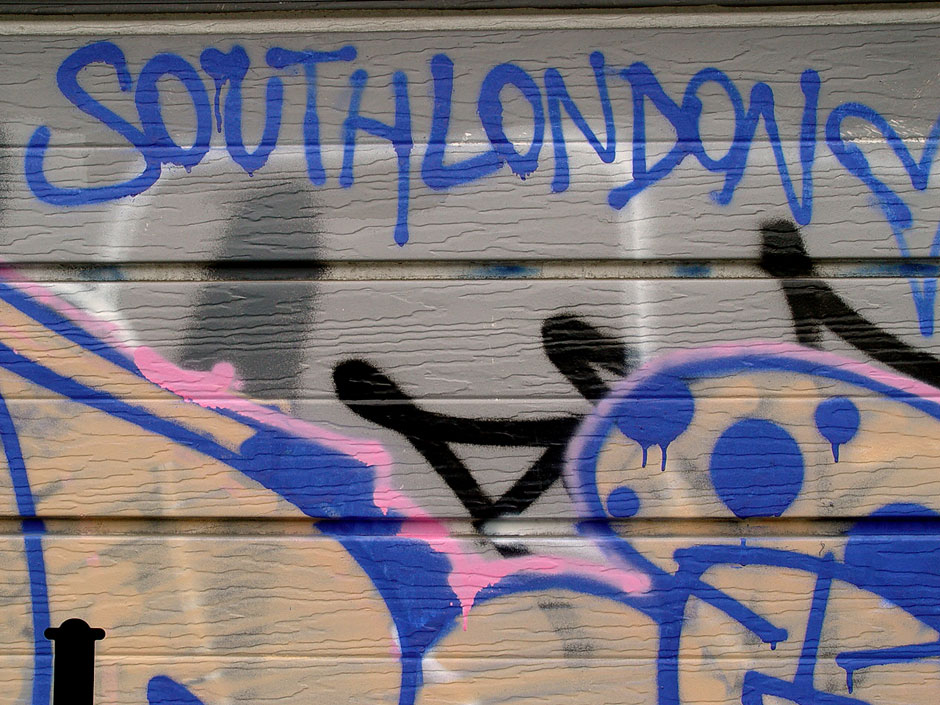
This was wonderful listening - Robert Elms on BBC London taking a look at the complex issues involving regeneration in the capital.
You can’t condense the changing social structure of London in one three-hour broadcast; likewise attempting to summarise the complex pros and cons in a hit and miss blog post is sheer folly. But the overall theme of the broadcast was one of reflection with balanced optimism.
This is the personal stance that I am starting to form when looking around at the recent regeneration taking place around South London. I was present at #tuttle when spacemakers first stood up at The ICA and announced plans for what seemed at the time to be a micro-economic experiment at breathing some creative life [PDF] back into Brixton.
I remembered squirming at Tuttle when the phrase ‘gooseberry’ was used to describe Brixton Vill-aaage. This wasn’t a dedicated Tiger Economy Special Economic Zone, but a neighborhood that I had called home for the past fifteen years.
Still, I supported the idea of experimenting with some of the empty units at Granville Arcade and offering cheaper rents to the ‘creative community’ - whoever they may be.

The spacemakers pitch at Tuttle talked of artists, ‘makers’ and the sharing of social skills. It sounded like a genuine bottom up effort to kick start the local community into collaboration, even if the main creative driver didn’t quite have hyperlocal roots.
Anyone with a basic understanding of the economics of regeneration should have heard alarm bells ringing about what the wider consequences would be for Brixton. First you bring in the artists, and then the serious capital starts to flow. The space becomes sanitised and any perceived ‘edginess’ [URGH] has been diluted.
But when the chuffers did the first foodie tribe start to colonise SW9?
For the record, Granville Arcade wasn’t great, but it was far from empty pre-spacemakers. I remember an ACE army surplus store just up from Blacker Dred’s shop along Market Row. The periphery of the Arcade was busy, but the central space was lacking any economic life.
It was a little tawdry - possibly even gooseberry - but far from a South London ghost town.

Those first few weeks of the spacemakers social experiment were interesting, much in the same way that the kids back in the day job find the visit of a touring drama workshop interesting. It’s something that is different to the usual routine, but you wonder how long it will take for the novelty of the social experiment to wear a little thin, once all the creative avenues have been explored.
Anyone feeling hungry?
Oh Lordy.
The mass foodie-fication [GEDDIN] of Brixton Vill-aaage has perhaps been the most unlikely, but most celebrated regeneration story in London for the past decade. Robert Elms seemed to agree with this opinion, remarking that this side of SW9 is now completely unrecognisable to what is was like just twelve months ago.
For the record, I’m far from a foodie. I eat to pick up energy, and then I move on. I couldn’t give a chuffers about taste and texture - I need to refill, and preferably at the cheapest price.
Brixton Vill-aaage shouldn’t be for me.
But I’ve found myself eating at the Vill-aaage whenever I’m free on a Saturday. It’s a convenient meeting place in the centre of town. The consumption of the food has also become a social act [ha!] with Granville Arcade now becoming the place to be seen.
I witnessed this at first hand last Saturday lunchtime when a young lady brazenly walked up to me and my dining partner outside Brixton Cornercopia, whipped out an iPhone and then Instagrammed me and my meat and two veg.
Blimey.
The image of me dribbling a quite delightful cauliflower soup down my goatee beard has probably already spawned a dozen crappy tumblrs. I’ll stick to Mr Di Lieto next time.
Brixton Vill-aaage probably went past its Best Before date when Jay Rayner started all of his eulogising. You can’t blame one man for foodie gentrification, but every scene needs a High Priest in which to judge.
My verdict is now one of an over-priced self-parody of what the ‘scene’ originally was. £10 was the going rate for a decent Saturday afternoon fill up until a few months ago. I’ve noticed that the prices have started to creep up - a £15 plus dining bill is now not uncommon.
This is still chicken feed when compared to Soho etc, but I choose to eat in Brixton because it is my home patch. Out-pricing locals isn’t great for the local economy, but maybe that is all part of the wider economic theory that is continuing to carve up Brixton at such an alarming rate?
You only need to look around the corner at Rushcroft Road to see that not everyone in Brixton has been brought up to speed with this Nu gentrification. Somerleyton Road looks like the next piece of public land that is ripe for regeneration, all under the rather cloaked guiding hand of the mysterious Brixton Green.
A question continually asked in the Robert Elms broadcast was where does the existing community disappear to once regeneration wipes out a neighbourhood? For Brixton this has historically been West Norwood and the surrounds. But even this part of Transpontia is not resistance to the ridiculous property price wave that the gentrification of Brixton has pushed all the way out towards Crystal Palace.
Even the self-styled Triangle area is now an incredibly desirable location for young families to relocate to. The prices just about stack up, and the glorious green space of Crystal Palace Park are a large part of the attraction.
But where will it all end?
Orpington being marketed as South Brixton?
I have found that Stockwell appears to be gentrification resistant - and thank the chuffers for that.
Little has changed around SW8 in the past three years; little has changed in SW8 in the past thirteen years for that matter. Property prices have of course been inflated, but lovers of Cupcakes will be short-changed if they are looking for a food boutique along Stockwell Road.
We use to speculate that the Clap’ham-isation of this part of South London would soon creep into Sunny Stockwell. It seems to have sailed along a limp northerly breeze down Clap’ham Road, and then had all the air taken out of the sails when it reached the edges of Larkhall Park.
Affluence and poverty have defined Stockwell since the post-War period. It’s not ideal, but the mix of council estates with millionaire mansions (Edwardian properties yet to be converted) seems to somehow work.
Stockwell manages to remain atypical in resisting the tosh of the artistic regeneration theory. We’ve always had an artistic community [URGH] around SW8. Somehow the folly of the flow of capital hasn’t happened. In fact the exact opposite seems to be taking place with the artists of Annie McCall Hospital now having been moved out.
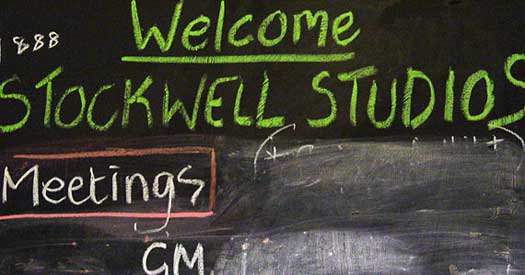
Instead there appears to be a regeneration from within around Stockwell, rather than the ‘facilitators’ from the likes of spacemakers. Van Gough Walk is one such example. An otherwise anonymous back street off the main Clap’ham Road drag has been completely transformed into an artistic, safe, local neighbourhood space.
Questions have been asked about the concentration of funding by Lambeth Council on this one single project in the area, rather than other streets that are possibly more deserving of structural regeneration. But you can’t argue that Van Gough Walk is a remarkable example of local regeneration, enabling the existing community to remain and benefit from their hyperlocal space.
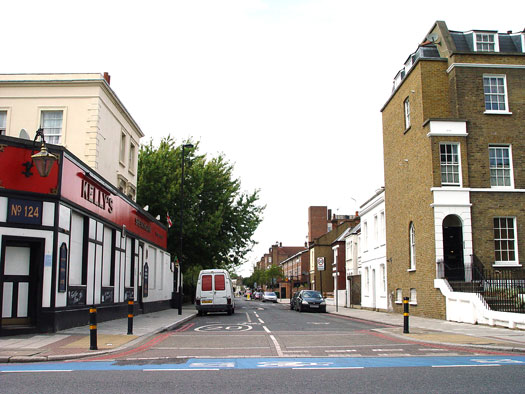
Perhaps the biggest loss in the great scramble to find more housing in South London is the disappearance of local boozers. The mighty Urban 75 has long since been documenting the lost pubs of Brixton. It makes for very sobering reading, and is one of the few similarities between the blatant regeneration of Brixton, and the regenerate from within approach to Stockwell.
A stroll down South Lambeth Road and the gentrification saga takes a new twist.
Here be Vauxhall, Nine Elms and Battersea.
Blimey.
This was mentioned on BBC London with a sense of great excitement. I really can’t decide if I share the same enthusiasm. I’ve blogged before how the area around the proud four towers of Battersea need some form of regeneration. The ‘excitable’ manner in which this all appears to be Malaysian investment at the expense (or not) of the existing community is quite alarming.
It is also worth keeping an eye on the changing Vauxhall gay community. Some quite bold claims about the social cleansing of the area have been made. My local Cllr’s have wasted no time in trying to dismiss these allegations…
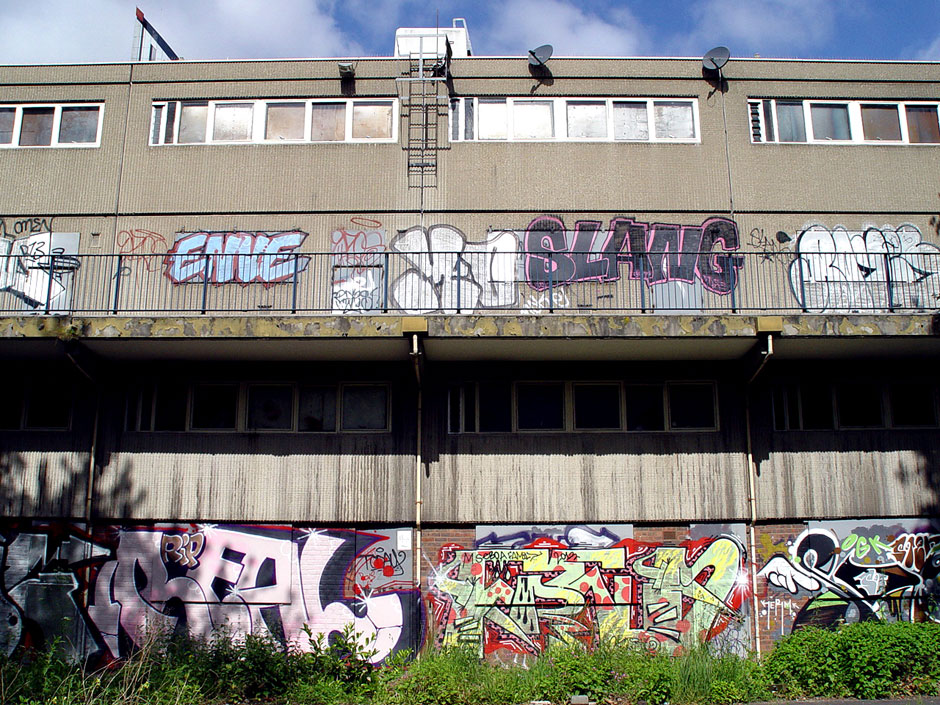
Out towards Elephant and the Heygate was another area touched upon by Robert Elms. This should stand as a textbook example of how not to go about regenerating a local community. The figures and data have been well documented. A local South London community has been forcefully ripped apart by Southwark Council, soon to be replaced by an altogether more affluent local population.
One can only sneer at the possible political consequences for the local Labour party in Southwark in allowing such affluence into their area.
Meanwhile the Walworth Road simply refuses to regenerate.
I CHUFFING love it down there.
And so that’s a random overview of some of the Transpontine themes coming out of the random Robert Elms broadcast. Do try and listen to the show if you get the chance before it drops off the back of the iPlayer.
No answers were given, but plenty of questions were raised. Housing remains the one key issue that needs to be balanced with regeneration. The reflection for what is lost in London can be balanced out with the optimism of being able to offer affordable housing to anyone who can’t keep up with the foreign investment pouring into VNEB, the Heygate et al.
The Third Way model that is so beloved in Lambeth may have delivered new leisure centres in Clap’ham and Streatham, but in return the community has to pay a price. For Clap’ham this is the construction of a private residential block, whereas up in Streatham it is a fuck off MEGA new Tesco.
Yeah, right on Chuka.
RT @ACS_LocalShops: @ChukaUmunna to speak at #ACSHoC13 about their role at heart of community <- MEGA Tesco opens in #Streatham this week.
— Jason_Cobb (@Jason_Cobb) November 19, 2013
Meanwhile, fine work from all those involved last weekend in celebrating a house warming party for a house that you will never be able to afford.
Affordable rents, social rents, mixed units, social housing - it’s all about COUNCIL HOSUING, isn’t it, Comrades?
And then there’s the personal. How do you position - or even justify - your own provision and role in all of this process?
With great difficulty.
We got lucky buying in 2000, taking on a South Lambeth Road flat that was barely affordable for us as a couple. It took five years or so to get back on an even financial footing.
Our neighbours use to mock us in a friendly way as to how we had paid FIVE times as much compared to their purchase a decade earlier. And here we are, over a decade later and the neighbours’ flat has just been bought for FOUR times our original buying price.
Much inner soul searching…
Robert Elms asked the question: who could afford to buy the house they now live in, given the current market conditions and their own income?
That’s me out.
Or hopefully *in* as you look around you and see how you can still exist in your ever-changing community and make it relevant to the type of lifestyle that you want to live in. It’s a fine line between bettering the conditions around you, and then a complete social cleansing of existing communities.
Do we really want to live in a Dickensian utopian myth of what Olde London should be like? A change in the infrastructure is exciting - it is what makes city living so special Along with the people, if they aren’t being pushed out…
Finally: Has there ever been a more suited name for a street than Bellenden Road?
Cycled to #dhfc and arrived in one piece. Comrades, I have seen things in Peckham's "Bellenden Village" I will never be able to unsee.
— Darryl (@darryl1974) November 16, 2013


No Comments on "Radio Regeneration"