Last Days of Colcdock
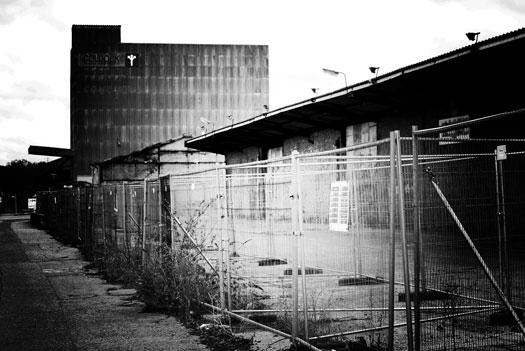
And so here is the companion piece to the Hythe Ghost Town blog post previously featured around these parts. It seems that the old industrial face of Colchester is ageing by the day now. It can’t be long until the old girl disappears and gives way to some bright new thing. Expect the words development and lifestyle to feature strongly.
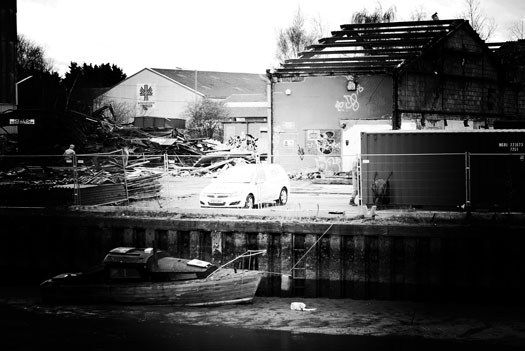
What first appeared as the perhaps the slowest site removal team to ever take to the yellow hard hats, has since stepped up its game since the January snow finally disappeared. Numbers have doubled from two, to four, and then again to eight, with a new sense of urgency given to getting rid of the once industrial heartbeat of the Hythe. There is glorious irony in increasing the pace to pull it all apart.
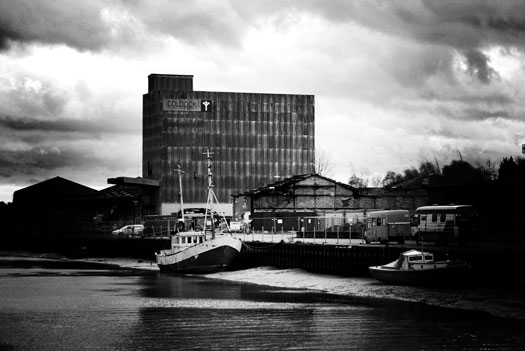
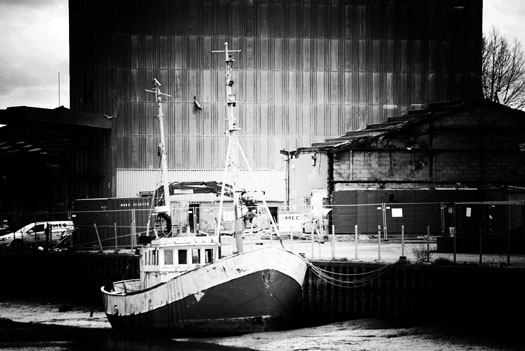
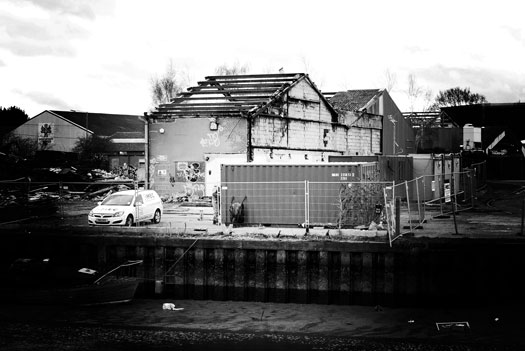
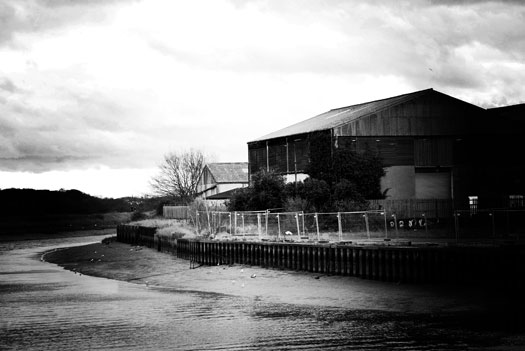
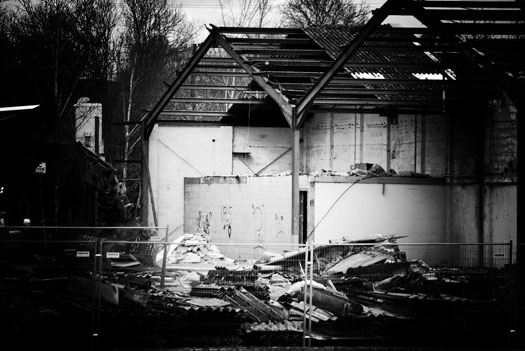
The storage sheds have been stripped of any metal worth salvaging, and then the bare bones of the site have been left exposed. The vultures are circling Coldock. A skeletal frame will soon be all that is left after years of toil and labour down by the muddy banks of the Colne.
One great obstacle remains however, with the Coldock loading bay still standing. The old loading bay handle has been amputated; the body of the girl is proving a little more resilient to giving up the ghost. It may not be appreciated locally with the same architectural iconic status that is now reserved for the brutalism of the University Towers, but it is still a landmark along this side of town.
Ah yes, about the near neighbour of the University, now the new industry around the town with the Knowledge Gateway replacing centuries of cargo passageway along the Colne. With Coldock pre-dating the University, a fresh panorama of Wivenhoe Park has now been opened up for the first time in fifty years. Stand along Haven Road with your back along Whitehall Road, and the campus comes into view, free of the obstruction of Coldock.
Progress. Of sorts.
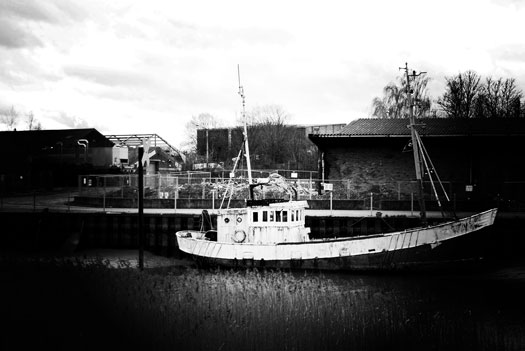
Time and tide wait for no man; or even new knowledge based academic. But it seems that the Hythe has one last trick up its sleeve ahead of the expectant Conflict Resolution that the University will soon be packaging up and selling around the world. The Gazette is reporting that a ferry service from Brightlingsea down towards the Hythe is being planned. A working boat down by the muddy banks? Whatever next? A Quayside Cafe that is kept open?
Across the Colne and the future of a relatively new landmark on the hyperlocal horizon is far from secure. The popular Quayside Cafe at King Edward Quay is facing closure after the University of Essex decided to shift it on to the Wivenhoe Park campus.
The University is proposing to transform the space into a student common room for the start of the summer term. The concern from many locals who use the cafe as a stop off point along the Wivenhoe Trail is that it will eventually be lost to further accommodation.
Cllr Julie Young of St Andrew’s ward has been meeting with Estate staff at the University to try and come up with a solution. Cllr Jon Manning of Wivenhoe Cross has started a petition to try and keep the Quayside cafe open. Recent developments suggests that the University *may* be up for a U-turn, if an outside interest is prepared to take on the facility and no doubt all the financial implications. Where money once flowed along the Colne now lays caution and guarded de-construction.
You could almost pen an academic essay about it with a similar working title.
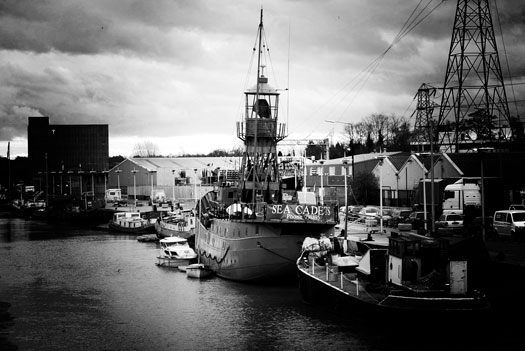
Preserving the industrial and social history of locations around the town as they start to disappear is incredibly important. A digital reminder can’t make up for the real lives memories, but once it’s gone, it’s gone. Bridge House just down from Coldock is already reduced to nothing but rubble and memories. Given the recent increase in activity by the hard hat wearers, another piece of hyperlocal history down by the Hythe won’t be hanging around for too long.


27/02/2012 at 10:18 pm Permalink
I remember taking pictures of Cooks Shipyard in Wivenhoe just before it all got torn down for development. The industrial age of the Colne is was a magnificent part of our community history and well worth remembering.